Booking choice: The half-day Dead Sea float, from $50 per person. Check dates Tour details
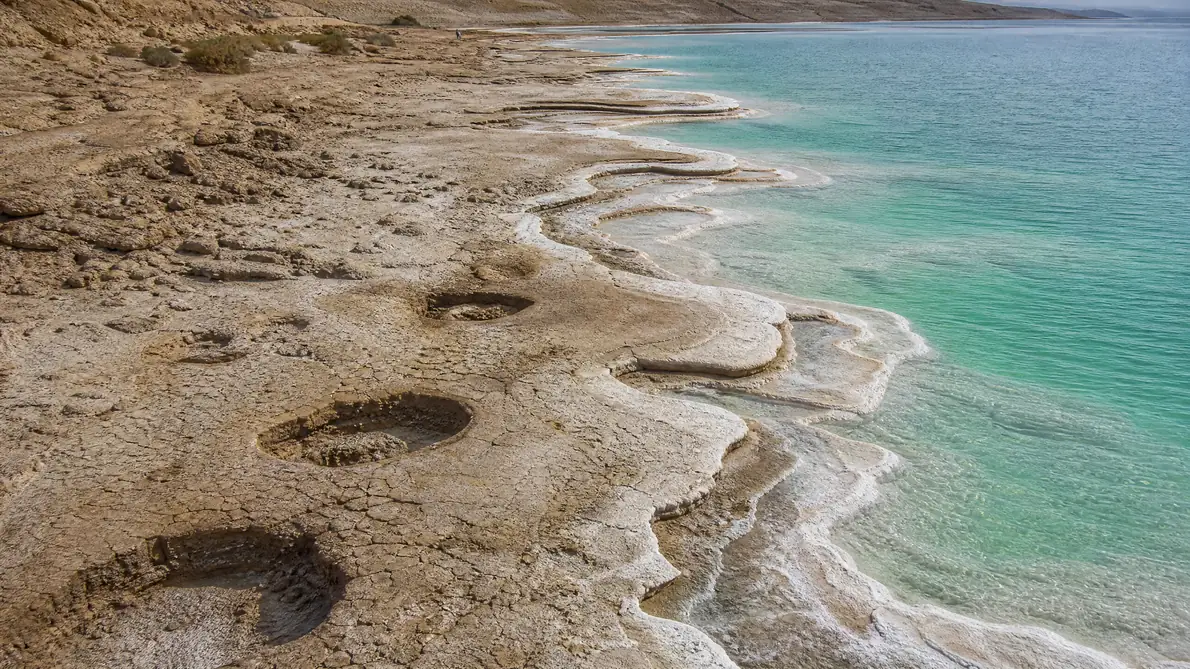
In 1930 the surface of the Dead Sea lay 390 m below sea level. Today it is about 439 m below, and the lake has lost nearly half its area. Nothing about this is mysterious. The water that used to flow in is used elsewhere, and the desert sun keeps taking its share.
Below: how fast the sea is falling, why, what the sinkholes are, which beaches have closed, and what it all means for a day trip in 2026. For where to float today, see our Dead Sea beaches guide.
The quick answer
The Dead Sea is falling by more than a metre a year, and Israel's State Comptroller expects the northern basin to keep dropping by about 1.15 m a year. The main cause is the Jordan River, which now brings a small fraction of its old flow. The retreat has opened thousands of sinkholes and closed the beaches at Ein Gedi, but Kalia, Biankini, Neve Midbar and Ein Bokek are open.
How fast is the Dead Sea shrinking?
More than a metre a year. The surface has fallen from 390 m below sea level in 1930 to about 439 m below, and the lake covers about half the area it did then.
The level has been measured since 1930, and the line only goes one way. It fell slowly until the 1960s, then sped up to about a metre a year by the 2000s and a little more since. A hydrologist at EcoPeace, the joint Israeli, Jordanian and Palestinian environmental group, puts the fall at more than a metre a year, and a recent report by Israel's State Comptroller projects about 1.15 m a year for the northern basin if nothing changes.
The figures below come from Israeli and Jordanian monitoring. A metre a year sounds small until you stand on a shore that slopes gently: on a shallow beach, one metre of height can mean many metres of new dry ground.
| Year | Surface level | Surface area |
|---|---|---|
| 1930 | 390 m below sea level | 1,050 km² |
| 1980 | 400 m below sea level | 680 km² |
| 2004 | 417 m below sea level | 662 km² |
| 2016 | 430.5 m below sea level | 605 km² |
| 2025 | 439 m below sea level | 554 km² |
Why is the Dead Sea shrinking?
Because the Jordan River no longer reaches it in any strength, the mineral industry evaporates its water, and the desert climate takes the rest.
The Jordan used to pour between 1.2 and 1.3 billion cubic metres a year into the sea. Israel's National Water Carrier, finished in 1964, and diversions by its neighbours upstream changed that. EcoPeace estimates the flow is now under 100 million cubic metres a year, much of it sewage and fish-pond water.
Two more forces pile on. Mineral companies pump sea water into evaporation ponds in the south to extract potash, bromine and magnesium. And the basin is one of the driest places in the region, with about 42 mm of rain a year at Sedom and summer highs near 40 °C. A plan to pipe water from the Red Sea was signed in 2013 and abandoned in 2021 without breaking ground.
What are the Dead Sea sinkholes?
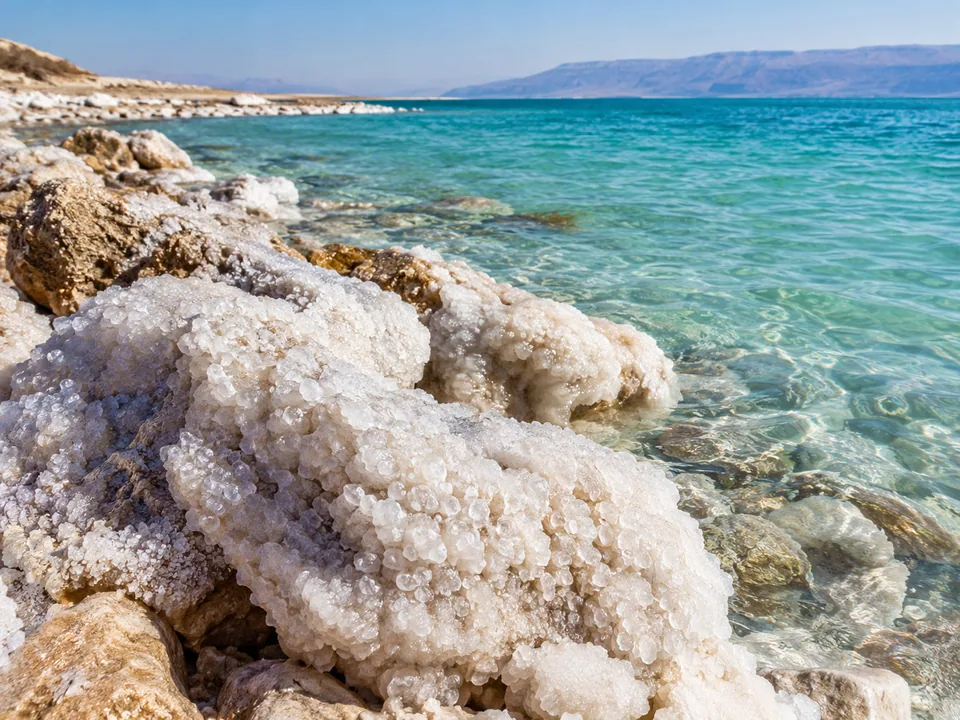
Holes that open suddenly where fresh groundwater dissolves the buried salt the retreating sea left behind. Israeli estimates put them at 6,000 to 8,000, with about 400 new ones a year.
As the sea drops, the groundwater drops with it. Fresh water then flows through layers of salt that used to sit in brine, dissolves them, and leaves hollow spaces under the surface. When the roof gives way, a sinkhole opens, sometimes several metres deep. They cluster along the western shore in a strip about 50 km long, between Route 90 and the water.
This is why the authorities fence off stretches of shore and why Route 90 needs repair work. For visitors the rule is simple. Use the declared beaches, keep to marked paths, and never walk out across the old shore to reach the water on your own.
Which Dead Sea beaches have closed?
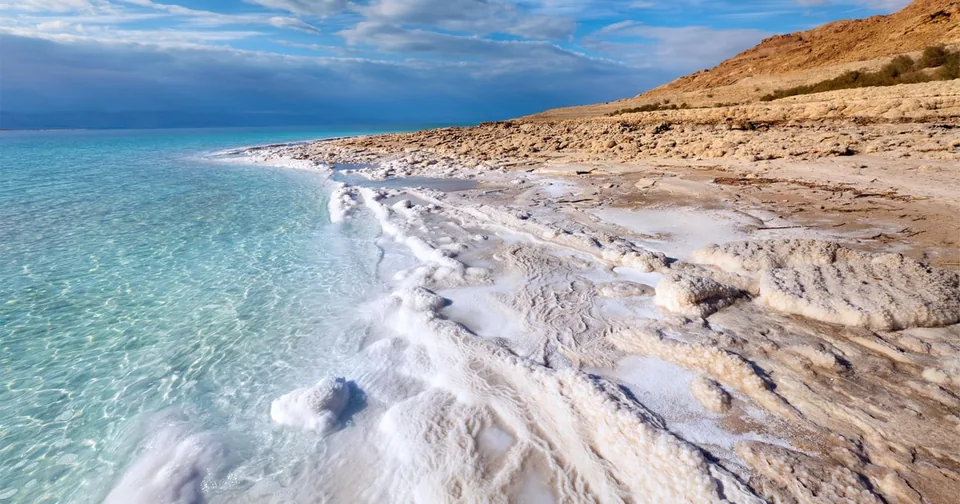
The beaches at Ein Gedi, including the old free public beach, and Mineral Beach to the north, all because of sinkholes. The Ein Gedi hot springs closed too.
Ein Gedi beach was once the flagship free beach on the Israeli shore. It closed because of sinkholes and the retreating water, and today an old lifeguard hut and a rusty pier stand far from the sea. Mineral Beach went the same way, and the Ein Gedi hot springs, whose pier was built to reach the water, closed in June 2021. Most of the old resorts on the northern shore have shut, leaving a few near its northwest tip.
What is open is clear and easy to plan around. In the north, Kalia, Biankini and Neve Midbar are paid beaches with showers, lifeguards and cafes. In the south, Ein Bokek and Hamei Zohar are free public beaches by the hotel district. The tour listings price a private Dead Sea beach at 45 NIS in 2026.
| Beach | Area | Status | Entry |
|---|---|---|---|
| Kalia | North | Open | Paid |
| Biankini | North | Open | Paid |
| Neve Midbar | North | Open | Paid |
| Ein Gedi public beach | Middle | Closed, sinkholes | None |
| Mineral Beach | North | Closed, sinkholes | None |
| Ein Bokek | South | Open | Free |
| Hamei Zohar | South | Open | Free |
Why is the water still close at Ein Bokek?
Because the hotel beaches at Ein Bokek sit on an evaporation pond fed by the mineral works, not on the shrinking northern lake. Its level is held steady on purpose.
The southern end of the Dead Sea dried out decades ago. What you see from the Ein Bokek hotels is a huge man-made pond that the mineral company fills with water pumped from the north. Salt settles on its floor, about 20 cm a year, which used to push the water up towards the hotel foundations. Since late 2020 the company has harvested that salt and moved it back to the northern basin, keeping the level stable.
The result is a beach where the water is close and the sand is groomed. The trade-off is the drive: Ein Bokek is about 1 hour 30 minutes to 2 hours from Jerusalem, against about 40 minutes for Kalia.
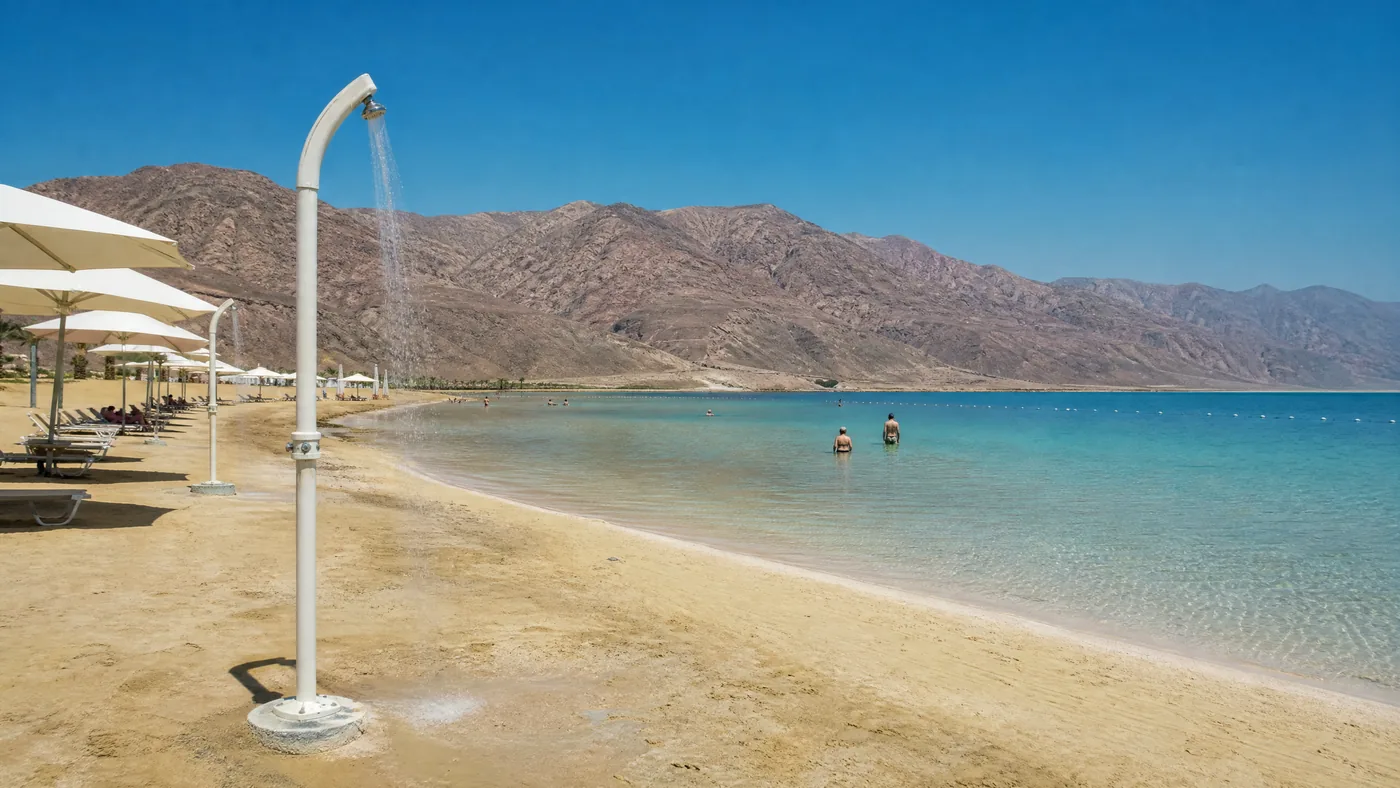
About three hours on a northern private beach with the entry paid, and back in Jerusalem by early afternoon.
Check dates for the half-day Dead Sea floatWhat does the shrinking sea mean for a visit in 2026?
A little more walking at the northern beaches, a lot of salt and mud underfoot, and a firm rule to float only at a declared beach. The float itself is unchanged.
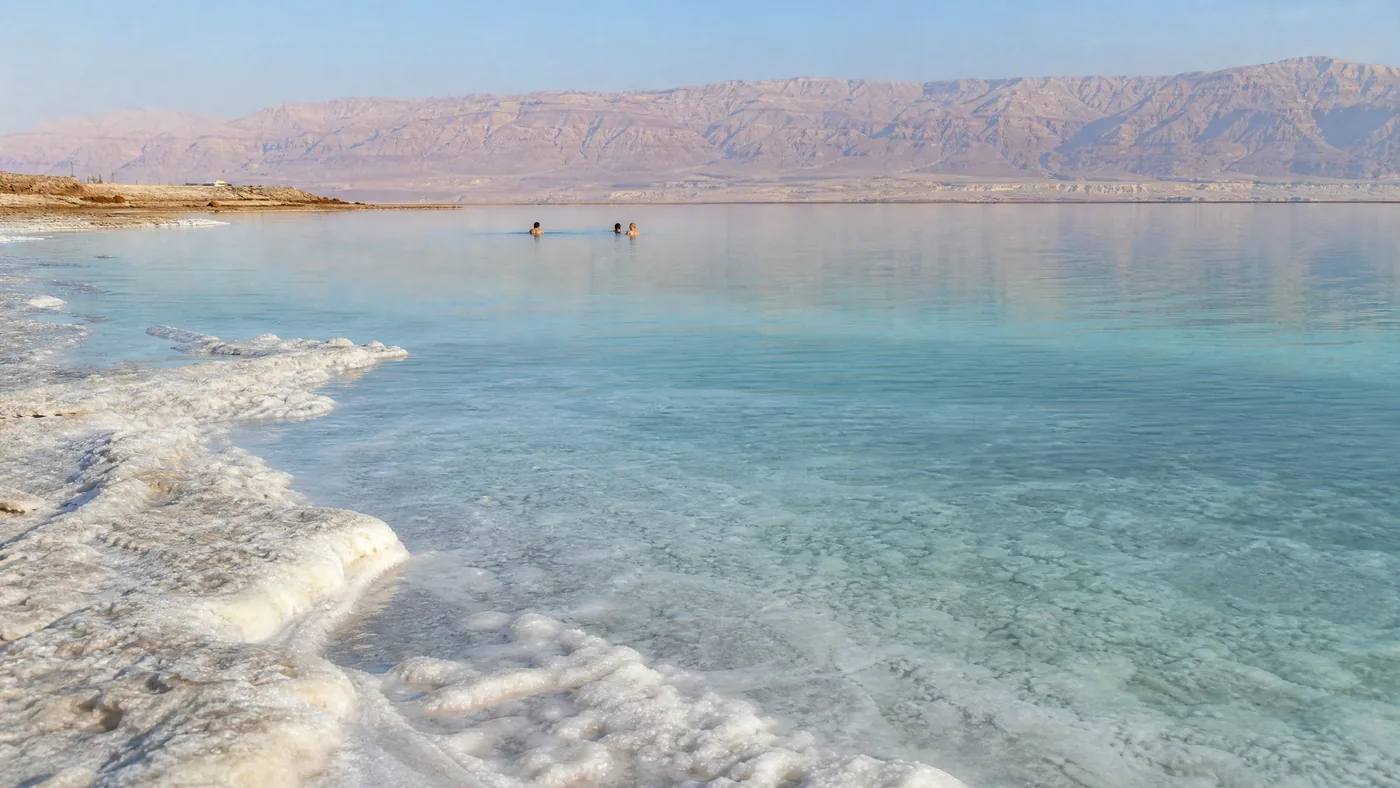
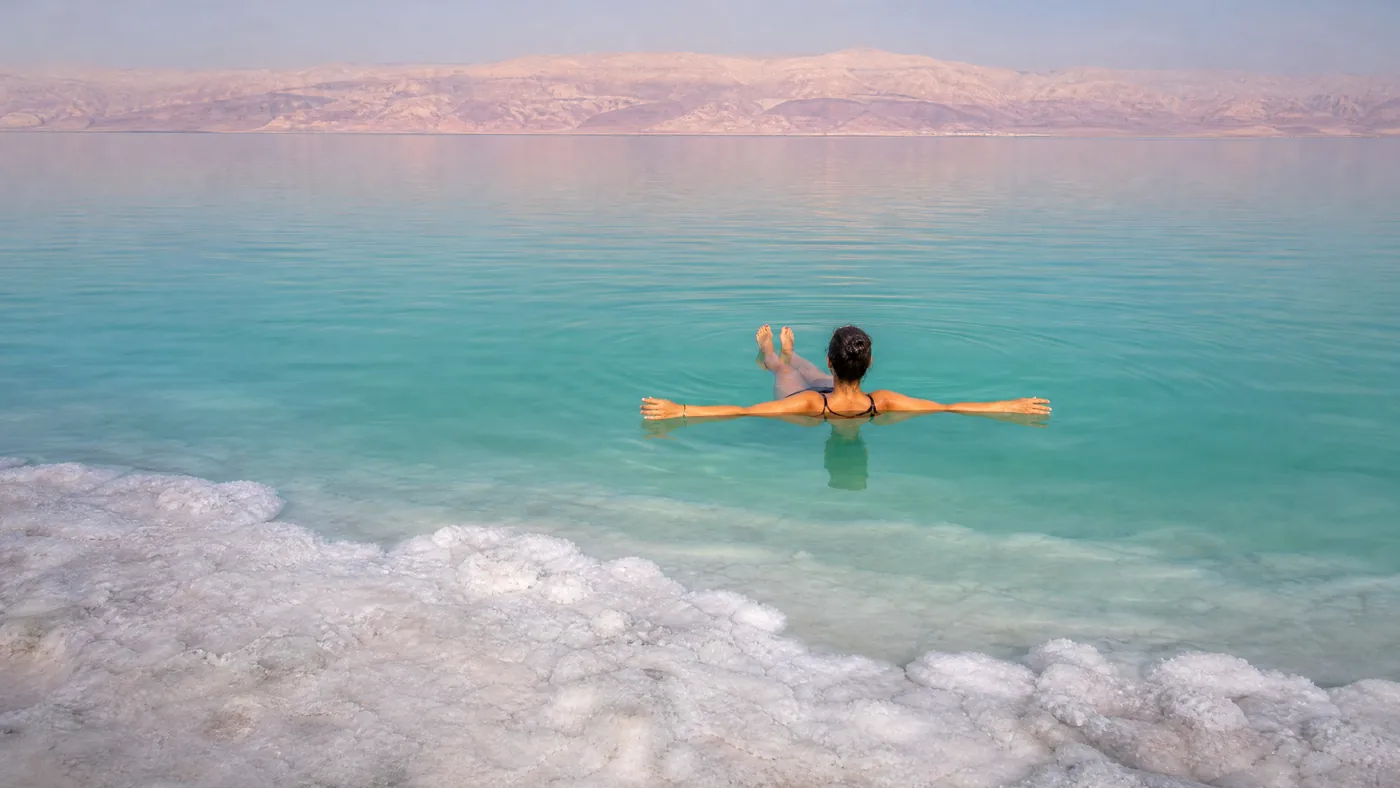
At the northern beaches the water keeps moving away from the buildings, so expect a slope or steps down to the sea. Older beaches added terraces and even little trains as the line retreated. Wear water shoes, because the salt crust is sharp, and use the freshwater showers on the way back. The water is still about ten times saltier than the ocean, so you float exactly as people always have.
On a day trip the operator picks the beach. The half-day float uses a private beach in the north, with entry paid, for $50. The Masada and Dead Sea tour includes the Dead Sea entry after Masada, from $115. For the rules on bathing and how long to stay in, read our floating guide.
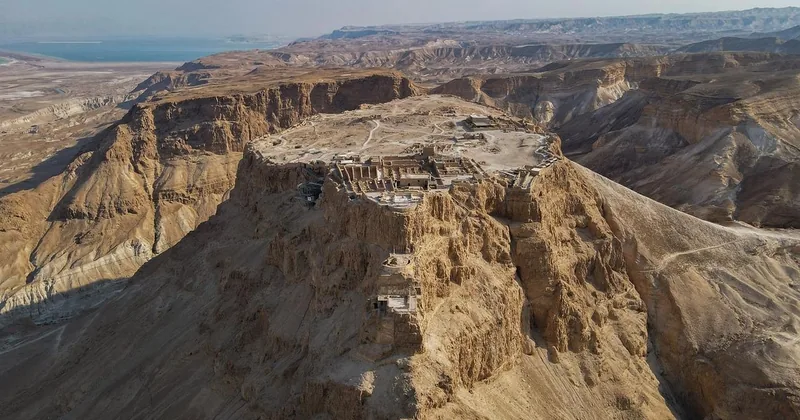
Masada by cable car with a guide, then a float on a managed beach, with pickup and every entry fee in the price.
Explore the Masada and Dead Sea tour Tour detailsFrequently asked questions
How much does the Dead Sea drop each year?
More than a metre a year. Israel's State Comptroller projects about 1.15 m a year for the northern basin if nothing changes, and the surface is now about 439 m below sea level.
Is it safe to visit the Dead Sea with the sinkholes?
Yes, at the declared beaches and on marked paths. Sinkholes open on the exposed shore, which is fenced off in many places. Never cross the old shoreline on your own to reach the water.
Is Ein Gedi beach open?
No. The Ein Gedi public beach and Mineral Beach closed because of sinkholes. Ein Gedi Nature Reserve, with its springs and waterfalls, is a separate place and is open.
Which Dead Sea beach has the shortest walk to the water?
Ein Bokek in the south, where the beaches sit on a pond kept at a steady level. The northern beaches, closer to Jerusalem, often have a slope or steps down to the sea.
Ready to book
Choose your day trip
Free cancellation up to 24 hours before on every option. Prices are from-prices in USD and move with the season.
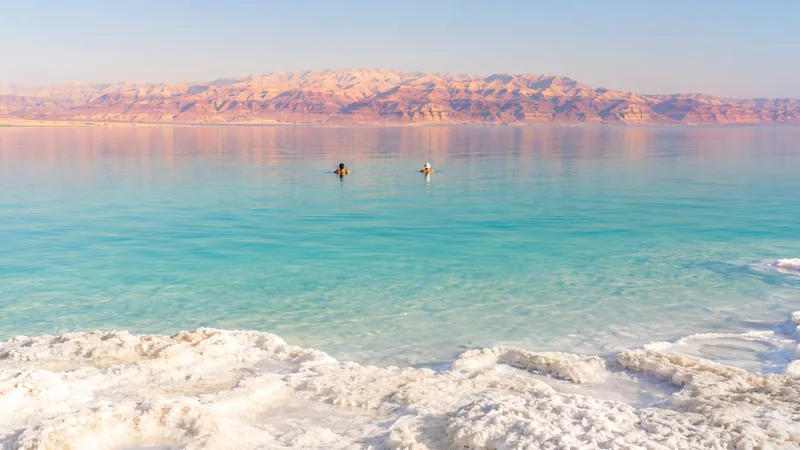
Dead Sea Float: Half-Day Trip
- Air-conditioned transport from Jerusalem
- Beach entry fee
- Written guidance in an app
Masada and Dead Sea Day Tour with Pickup
- Pickup and drop-off in Jerusalem
- Professional guide, air-conditioned coach
- Masada entry and the round-trip cable car
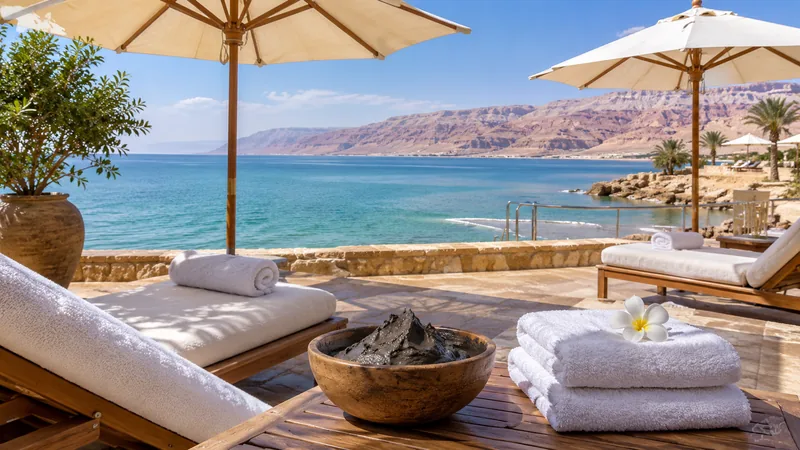
Dead Sea Spa and Sightseeing Day
A long day on the shore, with massages to book on top